
Healing
Notes from the Long Fold of Illness

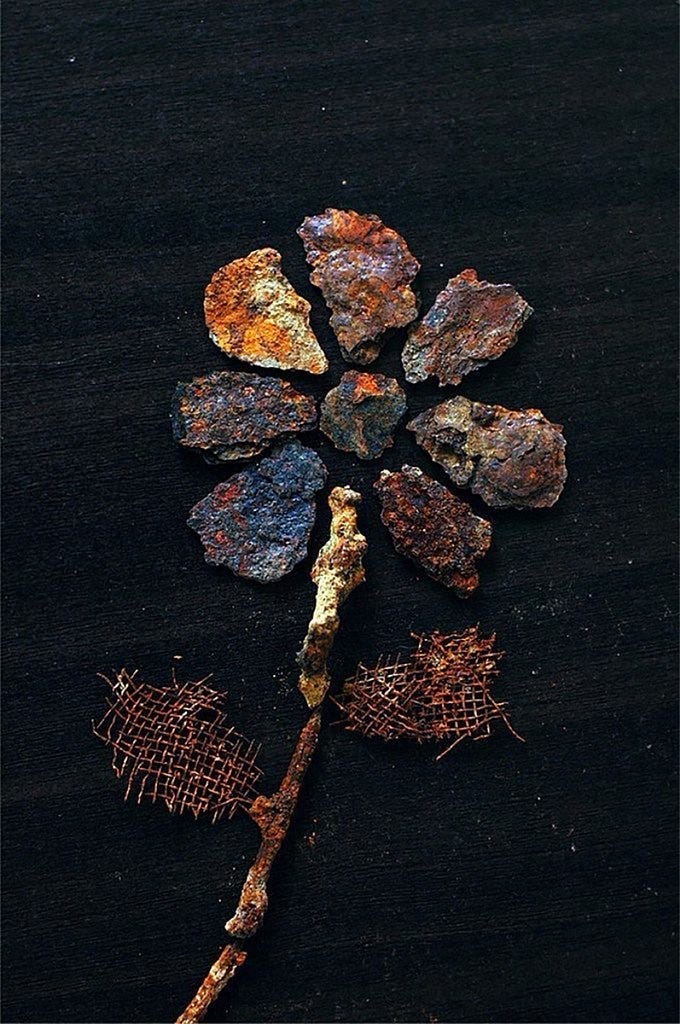
Healing is a relationship between variables we spend lifetimes trying to solve, patient and implacable, suggesting that what we call restoration might actually be transformation and mending and becoming share the same metabolic pathways.
We inherit narratives that cast healing as the removal of pain, extraction of trauma and elimination of what breaks us bur this is wishful thinking.
What if healing operates more like alchemy than surgery i.e., not excising the wounded parts but transmuting them into the very substance of our continuation?
Discomfort comes first, inevitably and honestly. It is our body’s semaphore, our psyche’s smoke signal and insistent knocking of what can no longer be ignored. We’ve been taught to treat discomfort as malfunction, glitch in the system or something to be medicated or muscled through. However, discomfort is the opening movement and question that precedes understanding. It demonstrates that the old configurations no longer serve and our previous self has become uninhabitable.
The move toward acceptance requires something more radical than resignation. Acceptance is forensic for it demands we examine the wreckage carefully as we develop a fearless inventory of what is and not what should be, not what we hoped for nor what we deserved. We move to focus on what exists in the human present tense. This is where most of us falter, mistaking acceptance for approval, confusing acknowledgment with endorsement.
Acceptance is the willingness to hold paradox without collapsing it:
This happened and I am still here. I am wounded and I am whole. I bear trauma and I am worthy of healing.
It’s the cultivation of what might be called bifocal vision i.e., our capacity to see both the rupture and the continuity, the before and the after, without erasing either.
What follows acceptance isn’t conclusion as growth emerges not despite the breaking but through it, the way bones knit stronger at the fracture site or forests regenerate most vigorously after fire. This isn’t the redemption narrative that insists suffering makes us better people, a claim that adds insult to injury. Rather, it’s the recognition that we are metabolizing organisms that convert everything we encounter into fuel for the ongoing project of becoming.
Growth in this context means something stranger and more difficult than improvement. It suggests that healing isn’t about returning to an original state, some prelapsarian version of ourselves before the fall. That person is gone. That body, innocence and particular configuration of hopes are archaeological sites now, interesting to visit but impossible to inhabit. Growth is our willingness to build in the present with materials we didn’t choose, using blueprints we’re inventing as we go.
Life is not sequential stages but simultaneous conditions, held together in some impossible suspension. Healing occurs in the space where we can feel discomfort without being obliterated by it, accept reality without being paralyzed by it and grow not away from our wounds but outward from them, incorporating them into a larger and stranger wholeness.
This requires developing elasticity of identity and capacity to stretch enough to include our own contradictions, failures of courage and moments of breathtaking cowardice alongside our unlikely persistence. We are both the person who broke and the person who continues. Both the moment of impact and the long aftermath. Both the question and the inquiring questioner.
What we call healing is really us just learning to live at the intersection of these forces of discomfort as discovery or diagnostic, acceptance as practice and growth as reorientation. A dynamic equilibrium that exists only in motion like a bicycle that stays upright only by moving forward.
The deepest promise here is transformation and discovery of what we might become with our breaking factored into the equation. We have our histories as ballast and evidence and proof that we have continued despite, thrived in multitudes and are more durable and more permeable than we ever imagined.
Healing, then, is not the erasure of harm but the integration of it through an alchemical process of converting poison into medicine, injury into insight and survival into a ferocious, hard-won lucidity. It’s learning to solve for the variable of ourselves in circumstances we never wanted to encounter and finding that the answer keeps changing because we keep changing, healing isn’t a destination but a direction and we are always becoming something other than what broke, something we couldn’t have planned for, something that emerges only through the patient and radical work of staying alive to our own unfolding.
My Journey
I will not call it a journey because that word wants direction and destination, an arc with tidy acts. Illness taught me that movement can be a circle, an accent or a repetition that shapes a voice rather than a map that leads somewhere. However, life thrives with both. A road and a room, a route and a receptacle.
For fourteen years I have lived with the question of cancer folded intimately into me. I have learned to live with its sudden commas that pause a sentence, long parenthesis that hides the tender part and the unpredictable impact collisions that are always possible but rarely announced.
When I say “I am a cancer survivor of fourteen years,” I mean more than chronology. I mean that my body keeps an account where dates are entries but the self keeps another where meaning is archived. Fourteen years is an argument against a single instant. It insists on chronicity, on a life threaded by recurrence and by recurrent thinking about recurrence. It is a life lived in layers; the first diagnosis, urgent strangeness of treatment, recalibration of the domestic caregiving, long wear of surveillance and oscillations between fear and ordinary mornings. It also means becoming fluent in the language of “what if.”
Connotations
“Journey” suggests progress, a forward thrust. “Survivor” sounds triumphant, a badge. Both misfire when placed too near the rawness of illness. I prefer a tamer verb. To inhabit. To inhabit illness is to plant a self inside a house whose rooms sometimes rearrange themselves without notice. Inhabiting recognizes agency and constraint at once. It does not deny suffering; it insists that suffering is a medium of living, a texture of attention.
Diagnosis is the room’s first breakage. The first years are a torrent of unfamiliar words, hospital notes, scans whose light becomes the new weather. At diagnosis the world narrows into a single modality of concern of survival strategies, the sequence of procedures and the demands of medicines. You are both patient and analyst; you sit with a dual pen, sometimes numb, sometimes hyper-literate.
One of the early lessons is that fear makes time elastic. Minutes stretch like taffy; days compress into an economy of appointments and instructions. You are learning to read your body as if it were a foreign map suddenly critical to your passage.
Between one and three years there is work of translation. The acute crisis recedes just enough to allow life to edge in work, relationships, children and the mess of living. However, the world has been punctured. You return to classrooms, meetings and bureaucracies of daily life and bring with you the knowledge that mortality is not a rumor. You learn new habits of vigilance in scans and symptoms turning into a private litany or the careful poetry of how you speak about your life to others. You are practised at calibrating the look on your face so that strangers will not rewrite you as fragile. At the same time you begin to collect gifts from a sharper sense of what matters, an enlarged capacity for small gratitude, a reordering of priorities no longer measured by achievement alone.
At five years there is a different code word “remission.” Five years is a cultural threshold in oncology and in conversation; it is treated in clinics as a line of demarcation. Yet for me five years was not a finality but a conditional stillness. The body remains competent at producing surprises. A scar might remember differently; cells charge more histories. Surveillance does not stop; it only becomes less proximate, less constant. Friends speak of “getting back to normal,” while you come to understand that normal is not restored. It has been revised.
Beyond five years, the public narrative expects resolution. In Kenya, as elsewhere, there is a cultural hunger for closure. The social imagination prefers arcs that end; our funerary rites have strict verbs and our celebrations evangelize victory but longevity with cancer rewrites this script.
Fourteen years is not a celebratory one-liner. It is a life that folded cancer into the domestic register of days. It is formalized uncertainty. Chronicity turns illness from an event into a condition of biography. You become a person who is always negotiating possible recurrence and navigates a contingency plan in a pocket of naked fate.
Recurrent Nature (Why the Back and Forth?)
If illness is an oscillation, recurrence is its uninvited rhythm. Biologically, recurrence is about the capacity of cells to remember and to reassert themselves; narratively, it is about grief that refuses to complete.
When a recurrence happens, grief does not restart at zero. It attached to memory in tow of earlier losses, fears or hope. The loop of grief is not a single circuit but a braided rope of hope, fear, mourning and practical adaptation. The loop repeats not because we are unwise but because the body and the mind have different timelines.
This back and forth is a pedagogy. With each ping of fear you practice tempering frenzy with craft. You learn how to prepare practical responses of who to trust, which clinic to visit and how to schedule scans and you also practice the interior work of how to descend into the necessary sorrow and return from it without being fucked up permanently. The oscillation trains attention and teaches a stoic pliancy that critiques both denial and despair.
There is also a socio-cultural axis to recurrence. In Kenya, where medical resources and social support vary wildly, recurrence is both public and private. A recurrence can be hidden because stigma pressures people to perform breezy health or it can be overshared because community networks demand literal updates. Both modes can be dangerous. Narrativizing recurrence well means choosing what to make visible and what to hold personal with care.
The Loop of Grief
Grief in chronic illness is for loss of life and the previously possible self, a routine that used to require no thought, the psychological safety that once seemed unassailable. The loop begins with shock, then practical mourning for dreams deferred, bodies altered or time lost. Later it returns as anticipatory grief in the mourning of what may be lost. The loop deepens upon confrontation. You find yourself grieving in miniature each time a scan is scheduled, each time a twinge arrives at night.
Grief is not only heavy; it is a teacher. It ploughs the internal landscape so that love becomes both more precarious and more intense. It clarifies which relationships are essential and which are weather. Grief is the place where moral reckoning and tenderness converge. It asks you to root for what you will hold and what you will release. It is a dialogue between the present and the past:
“What will I allow this condition to take from me?” and “What will I insist on keeping?”
Rootedness and the Foundations of Healing
Healing is too often used as a synonym for cure. Although cure is a medical verdict; healing is a broader site. Healing is the cultivation of rootedness in the presence of uncertainty. It is less a return to a prior state than a reconstitution of meaning. Holistic wellness, then, is not a self-help itinerary than it is a disciplined being that integrates physical treatment with emotional, social and spiritual tending.
Rootedness asks two things; first, that the person be seen as a plurality of body, psyche, community and history and second, that treatment be practiced with humility. In the Kenyan context that means recognizing the multiple streams that nourish a person i.e., the clinical, familial, spiritual, folkloric, and pragmatic. It means listening to the ways people say “ugonjwa.” Sometimes it is a single word in vernacular, Kiswahili or Sheng that holds an ancestral theory of cause and cure. Sometimes it is a chorus of prayers and hospital bills and borrowed monies. Holistic healing does not flatten these into interchangeable options because respects their difference and their interdependence.
Again, I tell someone “I have been a cancer survivor for fourteen years,” I am asserting that I have been in long-term dialogue with my body, clinicians, care and the community. I have weathered clinical uncertainty, financial strain, the reconfiguration of care networks and the mental labor of being both writer and patient. I have learned how to grow tenderness for the self without softening into passivity.
Challenges and Gifts
The account lists both debts and credits. The challenges are concrete periodic physical vulnerability, fractures in relationships that cannot accept prolonged ambiguity, financial toxicity and administrative friction of constant medical surveillance. There are also the less visible burdens of an identity that always begins with health disclosures and awkwardness of others who become spectators rather than companions.
There are gifts too, visceral and paradoxical. Illness clarifies and compresses life into salient points. It can teach attention where small pleasures of the warmth of love in the morning and bearable ease become disproportionally dear. It deepens empathy and sometimes loosens the need for performative achievement. For a writer, illness is both the thingness and material. It offers raw matter for reflection and craft, a subject so intimate that language itself must be remade to hold it.
Narrativizing Healing
Narrativizing illness in Kenya negotiates histories of care and the practicalities of survival. Our public health systems, social expectations and communal solidarities form layers in which personal stories are told. A Kenyan narrative of illness is seldom purely individual; it swells with kin, neighbors, churches, mosques, herbalists, pharmacists and the economies that keep a household afloat when hospitals are expensive.
There is also stigma, which mutates across regions and classes. “Ugonjwa” is be both a plea and a condemnation. Therefore, telling a story about illness here decides who will be implicated. Will you confess of the generosity of a neighbor who bought medication or of the friend who withdrew? Both impressions are true and both matter. The craft of narrativizing allows complexity to breathe without flattening it into moral simplicity.
Writing about illness in Kenya means attending to the practicalities as much as to the metaphysical. It means recording the reality of co-payments, absurdity of bureaucratic delays and how a test result can change the pattern of meals in a home and the heroism of people who help you through your life errands. It also means honoring the spiritual practices that sustain people such as prayer meetings, diviners and caregiving rituals because they do hold the only language left for certain kinds of hope.
Self-Actualization Through Illness
If illness can suspend certain possibilities, it can also open other kinds of being. Self-actualization through illness is not heroicization. It is us becoming more whole in a narrower compass that involves several gestures.
First, inhabiting and letting illness be a fact of life without allowing it to be the totality of identity. Second, disarming especially when possible, surrendering the performative armor that otherwise keeps you unreadable and allowing vulnerability to be a strategy rather than a defeat. Third, grieving and defending and allowing sorrow its due while building practical defenses of community networks, plans, and self-care to continue living. Fourth, personalizing and spiritualizing helps you create your own rites, readings and scripts that compose meaning without demanding universal assent. In problematizing and meaning-making, we are not falling for simple moral lessons; instead we are asking difficult questions about the structures that made our suffering harder and the intimacies that made it survivable.
For me, self-actualization was a composition. Writing was the way I reconfigured the rooms of my life. Documenting allowed me to witness fear without being swallowed by it. Essays, poems, letters to my daughter became the tools of existence, instruments that converted private pain into public thought. In this way illness taught me the craft of attention especially how to watch, observe, identify and make a what held more than one mood.
Precursor
A book is rarely a closure. It is an offering and a mirror. The project of writing out this long habitation is not to claim expertise on suffering but to enact a form of witness. Precursor is a place where the oscillations, loops of grief, practicalities of treatment, cultural textures of Kenyan life and the interior essays of meaning-making coexist.
My book’s final act is not to provide answers than it is to refine the question. It will not smooth the recurrence or promise resolution. Instead it will learn with readers how to live with questions, contingency plans and live a life that is not defined only by its medical annotations. It will narrate the domestic economies of care, politics of access and the work of grace in cultivating gratitude.
The book is also a letter to my daughter, friends and the community that helped pay for a treatment, those who held silence beside me through the drag. It is a meditation on what it means to be a man, patient, father, writer or survivor in this particular time and place.
It is, finally, an experiment:
Can language bear the specific gravity of a long illness without flattening it into cliché? Can it hold the difficult and ordinary wonders that made it possible to write another day?
Healing as Repetition and Rebirth
Healing is repetitive. It is a daily set of small re-choosings. It is not the annihilation of fear but the discipline of attention in its presence. When I say “I am fourteen years a survivor,” I am not counting victories as trophies. I am marking time as a set of sustained practices pf hospital admissions attended, friendships tended, art created in the dark and caregiving that kept my life continuous. I am marking me not allowing a diagnosis to become the only story that can be told about me.
Living with chronicity means living with a patience that is not resignation. You accept that some questions will never disappear but that some answers are available nonetheless in how to be tender; how to be proactive with our actions; how to live so that your life is not a denial of fragility but an honest encounter with it. Cancer taught me to think in long sentences and to keep, amid the tremors, a hand on the page.
Precursor will try to do the same; hold, witness and leave behind evidence that other people can take home like small lamps.