
Jadudi
Emmanuel Jadudi Otieno, Seven Years Anniversary

by Omondi Ochuka
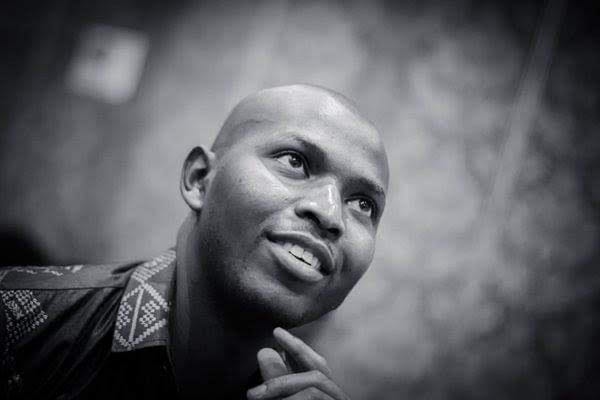
Astrophysics has one of those beautiful, presumptuous theories that human beings make when they have run out of simpler explanations for the universe that when two black holes collide, they do not annihilate each other. They merge and create gravitational waves so powerful that the clothe of spacetime itself shudders, bends and exhales a long distorted sigh. Instruments built in Louisiana and Washington, buried deep beneath the earth in their concrete casings, have registered this shudder. Scientists have wept over their data. One of them, a physicist at Caltech, described the moment he heard the converted audio of two black holes colliding as “like hearing the universe speak for the first time.”
I heard something like that once.
It was your mother’s voice. March 4, 2019. 10:06 in the evening. I was in Nairobi, a day after having been to Kisumo where I helped mom care for you at JOOTRH, standing in my kitchen with instant coffee growing cold in my mug, when the phone rang. Her number. I answered immediately. What was she calling to say?
“My son,” she said. “Mos kuom wito osiepni.”
I sat down on the kitchen floor. A crumbled lowering. My posture seeking the lowest available ground. The coffee mug stayed on the counter. Night went on without my permission.
The Tenth Time
Today, February 15, 2026.
Mama cuts the sugarcane herself. She insists. Her hands know the machete the way they know the rosary, the way they know my face in the dark, with a sureness that does not require sight. The blade finds the stalk near the root. Its juice run down the cane’s pale flesh, sticky and cold and deeply sweet.
I am wearing a white shirt. I know this. I wore it on purpose.
“Mama,” I say.
“Yes,” she says, not looking up. Already cutting the next one.
The juice runs down my wrist, onto my cuff, blooms amber-dark on the white cotton. Grief, I think. Sweet and messy and beautiful. That is what Biko should have written, actually. Not the thing in your head. The thing grief is. It is sugarcane juice on a white shirt. It is a stain you don’t wash out. It is a sweetness that costs you.
Your bamboo is yellow and green along the eastern hedge. I counted them once, the bamboo stalks, the way children count things to give the world an order it doesn’t actually have. I stopped counting at forty. The bamboos didn’t care. They went on growing eastward, leaningly, toward where the morning comes from, as if they too were expecting something from the direction of the lake.
This is my tenth visit to your grave. The tenth time I come to beat you mbaka. There is a Luo custom, not spoken of in the tourist brochures or the grief counseling pamphlets, where the living return to the dead, tap the grave, and say: I am still here. You left me here with you. I am still here, Jadudi. I tap the weathered headstone. The rain has worked on it these seven years, softening the inscribed dates and the dash between them, which is the whole story compressed into a horizontal line the width of a thumbnail. I think about the dash. How it contains Arya Primary. Our years at Thurdibuoro. The first year at UoN. Your signature smile. Blue jeans and create cotton voile shorts. India, three times. The rain on your mother’s roof in Kisumu and the sound it made on the corrugated iron, which you described to me once as “the only kind of music that sounds like it means it.”
The dash contains all of that. A dash. What an outrage. What a beautiful outrage.
Simulations (Or: What If)
I run the simulation sometimes. Eeryone does. We cannot help ourselves. An unauthorized computation that runs in the background of all your waking hours.
What if you had not had the tumor? What if the universe had distributed its catastrophes differently, more equitably, to people with less living to do? You would be thirty-five now. Perhaps thirty-four, depending on the month. You would have finished your political science degree eventually, between the surgeries and the recoveries and the interminable Indian hospital corridors, and you would have gone into something that mattered to you in that restless, world-touching way you used to talk about. Policy. Healthcare advocacy. Good life. Dignity. Music. Some hybrid of a beautiful life that had no name yet. You were always describing things that didn’t have names yet.
In the simulation, we are both in Nairobi. You have a car, something not modest (you had no room for modesty) that you are obscenely proud of. I have leukemia. This does not change in the simulation; my cancer persists across all timelines, apparently, a constant in the function. I am managing it with the indifference of someone who has learned to coexist with an malignancy they will never entirely defeat. We meet for tea somewhere along Ngong Road, one of those new places with exposed brick and overpriced chai and a playlist that sounds like someone’s idea of what healing feels like.
“You look terrible,” you say.
“You look great,” I say, because in the simulation you do. You are wearing something sharp, with that remarkable sense of style you always had, that classic-man-who-loves-the-arts-and-knows-it quality that made people turn their heads in hallways.
“You should eat,” you say. “Ochuka, you should really eat more.”
We argue about whether grief is productive. You say yes. I say it depends on what you mean by productive. You say I always do this. Take a simple thing and philosophize it to death, which, you note, is ironic given my condition. I say I’ve always been like this. You say you know. That is why you’ve always liked me. We drink our chai. Nairobi goes about its enormous, graceless business. Matatus. Arguments. Someone selling something. The sound of a city that has been convinced it is temporary.
I reach across the table and do something I never enough when I had the chance. I say, “I am glad you existed. I want you to know that specifically.”
In the simulation — unlike life, unlike the kitchen floor, unlike the phone call, unlike the night that coiled its wings for you to fly — you get to hear it.
Blue Stream
We were teens and stupid with joy, curiosity and reckless abandon. With absolute unearned certainty. A deep, physical conviction that the future was a country we would simply walk into one day, unimpeded, visas in hand.
Thurdibuoro. A time we had. Oiled in the gold of names of places we were homesick for before we even left for UoN and everything felt possible and only available before life gave us evidence to the contrary. The lecture halls. Arguments that went on past midnight about things that seemed urgent. Fanon, structural adjustment, whether Nairobi had a soul. Blue Stream, where we sat in the afternoons. A crusty baking light at around four o’clock, when it hit Sango water and scattered like something that couldn’t decide what it wanted to be.
“I want to affect the world,” you said once. As a fact about yourself that you were stating plainly, the way you might say I am Luo or I am Jadudi. Something so true it didn’t need defending.
“What kind of affecting?” I asked.
“Where people’s lives change because you passed through them.”
I remember thinking that is either the most arrogant thing I’ve ever heard or the most honest. I decided it was honest. You meant it with the full sincerity of someone who had not yet been given a reason to mean it less.
The world affected you first. That is the thing about catastrophic illness at twenty-two. It reverses the direction of impact. You had planned to leave marks on the world and instead the world left its mark on you. Cells dividing wrong in the grey matter behind your right eye. Grade III Ependymoma. Glioblastoma. Names like curses from a language no one asked to learn.
I have spent seven years trying to articulate the fact that you affected the world anyway. Not in spite of the thing in your head. Not after it. Through it. A medical fundraiser campaign that raised Ksh 6.4 million in forty-eight hours. The algorithm of Kenyan generosity, dormant and skeptical and scrolling, woke up when Biko wrote you. #1MilliForJadudi. People who had never met you sent Ksh 20. Ksh 20, Emmanuel. Somebody gave from absolute minimum, gave from the bottom of their pocket and the bottom of their faith, because your story was true and the truth of it required a response.
You affected the world. You affected it from a hospital bed in Chennai while reading old blog posts on your phone at 2am. You affected it stubborn and slurred and leaning on a walking stick at Dunga Hill Camp, in December 2017, when the sun was setting orange over Nam Lolwe and you tapped me on the shoulder and my face lit. The world was starting to fear us gone. You affected me, specifically. A gravitational wave. A shudder in the clothe of my material space. My story.
The Portrait
Your portrait hangs in the living room.
I do not know what to do with this information but it is true and it stays true every time I visit. Your signature smile. Blue boxed shirt. Thumb up. It isn’t the most you detail. Whoever chose that photo chose the one where you are absolutely, unapologetically yourself. Just Jadudi.
Your mother smiling, in another frame. A day before India.
I stand in front of it for a long time on my visits and try to understand the grammar of being survived. What is the right tense? You were. You are, in the present-tense of my chest. You will be, in the future tense of every story I tell about what it means to live with illness without apology.
The rosary hangs from the plaque. I run my thumb along the beads. I learnt this from dana. She runs her thumb along things she is trying to remember. Muscle memory as prayer. The body’s version of persistence.
I came to see myself, I think. That first Valentine’s after. Over a year since I last stood here. The grief having accumulated enough that it needed the full pressure of a holiday built around love to make me move toward it. I stood where I stand now and thought: what do we do with them? What do we do with the people who leave us by dying, who take their light and fold it back into the dark from which all light originally comes? Do we preserve them in amber? Your swag, life-loving heart, the way they said your name with that Luo cadence? Do we let them continue to grow, the way your bamboo grows, leaning eastward, toward where the morning comes?
I don’t have an answer. I have only the practice of returning. Our tenth mbaka. The twentieth. The accumulation of returns as its own kind of answer.
The Night I Left JOOTRH
It was October 2018 when they admitted you. The last admission. Six months is a long time and no time at all, depending on which side of the bed you’re on.
I came to see you in. I want to say February but the specific date has been dissolved by the acid of everything that came after. You were in the bed by the window. The light was doing nothing special. You had a face towel folded on the table beside you and your hands were on the blanket, still. Hands are still when the body is conserving all available energy for the work of surviving.
My fingers trembled when I held yours. I don’t know if you noticed. I hope you didn’t. I was trying to be the calm one, which is always a thing with me, always a nonfiction I don’t have to construct for the people I love so they don’t have to carry my terror on top of their own.
I saw it. A single tear. Your left eye. Just one. Running down your face from some depth you had no more words for. Sitting there. A whole world in a single tear on your left eye, Jadudi, a whole world.
I didn’t ask what it meant. I didn’t know then. I think I know now. I think it was you saying what your voice no longer could, which is: I know. I know everything you’re not saying. I know you’re scared too. I know you love me. I know I’m leaving. And I love you and I’m so tired and I love you.
I left for Nairobi the next day. I didn’t say goodbye. See you again? I can’t bear to make it official, which is to say I said: “See you later, buda. Take care of mom until then.”
You, with that slurred speech and smart mouth, smiled.
The next evening. 10:13. Your mother’s voice. Mos kuom wito osiepni.
Phone Call Cosmology
I have thought about this so many times that it has become a scripture for me. Your mother calling me. The gentleness of it. The grace.
She had been at your bedside for the last ten months. Hospital corridors and nurses and the small indignities of seeing someone who grew inside you become someone who cannot eat without help. She had prepared your porridge that morning. She had fallen asleep for a few minutes and when the nurse woke her to give you your medication, you had already left.
She did not call me to grieve at me. She called me to grace me. To make sure I knew, from her, in her own voice, before the internet did it in its characteristically brutal and collective way. She called me to say: your friend is gone, and I am still here, and I am telling you gently.
“I am sorry, son,” she said.
Can you imagine? Her son had just died and she was apologizing to me. She was offering me comfort from inside her own devastation. Your mother is always the one who feeds you even when she is hungry, asks if you’ve eaten even when she has not.
How could she comfort me with her grace? Wasn’t she the bereft sufferer? What hole did I suffer in comparison?
I have carried this question for seven years and I am closer now to an answer. I think grief does not distribute itself proportionally. I think it fills the available space completely, whatever size the space is. Your mother’s grief and my grief were the same grief in different containers. She did not have less room for mine just because hers was larger. She had, in fact, learned to hold grief so well that she could hold multiple griefs. Hers and mine and her porridge cooling on the table and the night going on along its orbit.
I have been trying to learn that. The simultaneous holding. The generous container.
What We Do With Them
What I know now, that I did not know at twenty-something, stupid with joy, at Blue Stream in that four o’clock light, is that we do not do anything with them. That is the wrong preposition. We do not do with them what we do with a tool, efficiently, toward a result. We do not process them or metabolize them or convert them into something useful for our forward motion.
We carry them in us. Fussioning. That was the word I used and I meant it exactly. Nuclear fusion. The joining of lighter atoms into heavier ones, with the release of extraordinary energy. You and me, Jadudi. Your glioblastoma and my carcinoma. Your three surgeries, then four, then five, then more. Your college funds folded into that gaping medical hole while mine were folded into a different gaping hole of the same family. Two Luo boys from UoN, two sets of atoms already doing the hard work of being alive, and then the additional catastrophe of being sick in a country where being sick is its own poverty, its own specific humiliation.
We fuse. The living carry the dead as fuel. Not metaphorically. Actually. Your courage and I mean the courage of you, Emmanuel Otieno, wuod Dudi, a boy from ridges of Kakello who was twenty-two and wanted to affect the world and then got a brain tumor and went to India and came back and went again and came back again and one more time — that specific courage is in me now. I metabolize it. I use it.
When I am sitting in to teach my class and a student asks what inspires my life and I say living with terminal illness, I am partly lying, as I said. I am also partly telling the truth that I cannot fully articulate, which is: you. You inspire me. Your stubbornness inspires me. Your single tear on your left eye inspires me. Your mother’s porridge cooling on the table inspires me.
The dash between your dates, the whole compressed story of your life, inspires me every time I drive past a graveyard and think about the dash between my own dates, which is still being written, accumulating material and has not yet been compressed into a thumbnail.
Dad’s Baritone
While we are talking about what we do with them, your father’s baritone listening to the radio in the evenings. A register, that frequency. I was home when I understood that the quality of silence inside a house changes permanently after a person leaves it. The house does not know it is empty. The house keeps the shape of the person who was there. The chair holds the impression. The radio station stays tuned to what he listened to.
Your car is parked in the front. Has been parked there. Silent patient. It does not move and I do not move it, which is perhaps irrational, perhaps exactly rational. What a drag, people say. What a stubborn man.
Yes. Stubbornness runs in this. Stubbornness as love. The absence is not complete itself. Your car stays because if he moves the car, the driveway becomes a different driveway, and they are not ready for a different driveway. I am still visiting the driveway that knows your car. Every time I open the gate and it is me. It is always me, who does not call ahead, because home has no call button. Home is something I birth in me and do not need to announce. Every time I open the gate and your car is there in the light, I feel the full weight of your absence and the full comfort of your presence.
You are in the car. Driving past a rowdy youth at Komdele shortly after the stalemate gripped the country in 2017 elections. He is in the baritone I sometimes hear in my own voice when I am tired and not caring to be composed. He is like my grandfather. I sit quietly and listen before I speak. He is in my pensiveness, which is also a form of love.
What do we do with them? We put them in cars. The frequency of a radio station. The lower registers of our own voices, descending sometimes without warning into familiar bass note, and someone who loved them hears it, and looks up, and for a second the room is briefly doubled. The living person and the ghost of the living person, in the same frequency.
They break down to see me home. Shortly after, heavy downpour.
Mango Season
From here, if you climb Dudi Hill and stand at the eastern face, you can see where the lake begins. Nam Lolwe. Far bista ahead. A sea without shores. From certain angles you cannot find the other side of it. Itbis not as intimate as it is from our home in Nyabondo Plateau. You look and look and eventually you stop looking for the other side and just receive it. The infinite horizon. Herons. Eater that in the late evening goes from silver to bronze to something darker, something that has no colour name, something that is the colour of being alive and not knowing how long it will last.
We strolled there, mama and I. She is older now. How they grow so fast, the people we love; how time metabolizes them in the same tedious ongoing way it metabolizes everything; how she who was once the uncuttable force of your whole childhood is now a woman who needs to sit after a long walk. She cuts my sugarcane because she wants to give me something, always, it is always her wanting to give me something, even when the something is just sugarcane, a snack or something water.
The mango trees are blooming. Several hanging and swelling in an obscenely beautiful posture. Mangoes weeks before they fall. The chickens are quieter than I remember. Is that possible, that a flock of chickens can become more philosophical with age? Maybe. Maybe everything eventually achieves a certain gravity and quiet.
I thought about you here. Standing on the hillside. Jadudi would have had opinions about this. The view. Development encroaching on the lakeshore. What it means to be from this place. The lakeside, the grey-green water and the melancholy of beauty you were born into. You would have had a whole fully-formed argument, with citations, delivered in that slurring-but-determined voice that the surgeries left you with and that you refused to let embarrass you. The clear-eyed stream runs below the bamboo. It runs honestly without waiting for an audience.
Rainy Days
Biko wrote about you first. I know that. The story that preceded us both, the story that turned the hashtag into a movement, is his. It is right that it is his. He told it true with that careful tenderness his best work has, that tangent against making suffering beautiful in the wrong diagram or aestheticizes at the expense of the person being aestheticized.
I need to write about you too. I have needed to write about you for ten years and I have orbited it, written around it, entered it sideways in other essays about cancer and grief and what it means to be alive in a body that is also actively working against you. I have written about the nurses who pray over me instead of seeing me. Illness colonizes your identity. Dana and Sori and my daughter and the lake and my grandfather’s handwriting on the graveyard sign.
I have been writing about you this whole time. I just hadn’t said your name.
The sound of rain on your mother’s roof in Kisumu. March 29. You were peacefully laid. I was there. Nuela. I said your name. I beat the grave, slowly — mbaka, once, twice — not because the custom demands it but because my hands needed something to do, some physical testimony to make. I am still here. You left me here with you.
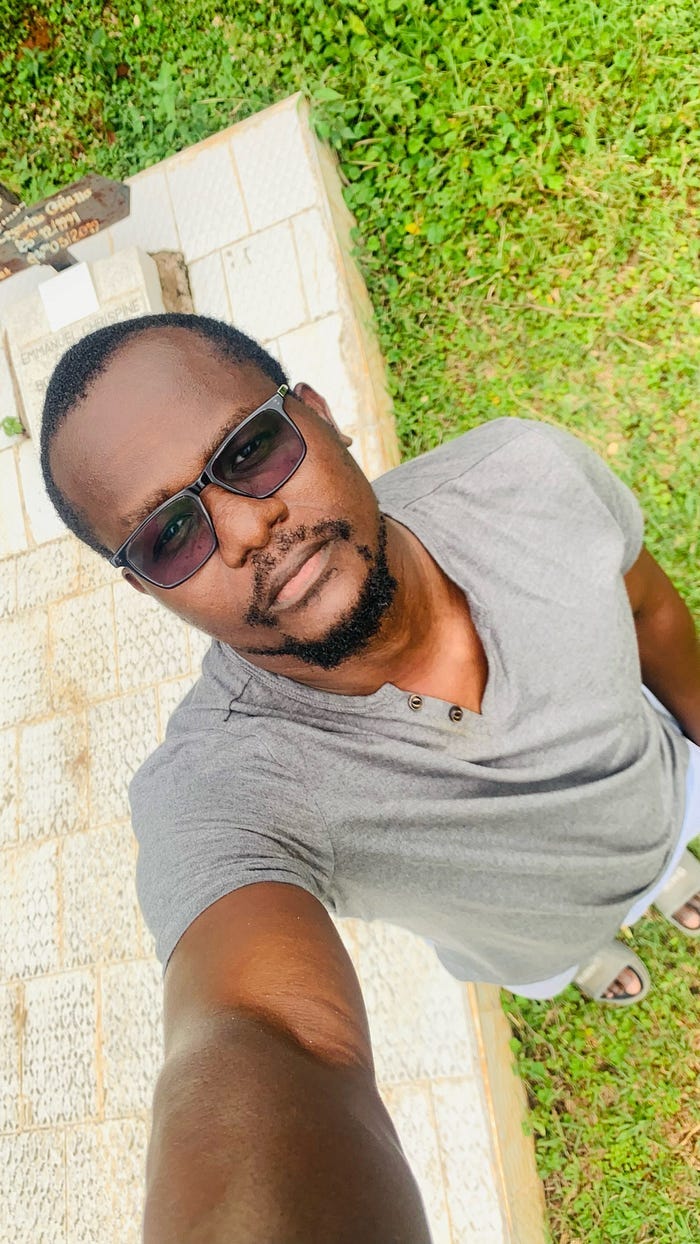
I have come back nine more times. Today is my tenth. I am standing at your grave saying your name out loud again. Emmanuel Jadudi Otieno, wuod Dudi, wuod Leonora yaye, silwal oke Kisumo, japesa ja Kakello Kachieng’, osiepna yaye, my fellow star-matter, my fellow catastrophe. The bamboo is leaning eastward behind me and the mangoes are almost ready and your mother is watching from a distance with that face she makes when she is watching me do something that is costing me something, which is also the face she makes when she is proud.
Fussioning (Conclusion, or: The Continuing)
Astrophysicists don’t say this in the papers, or maybe they do say it and I have been too undisciplined in my physics to find it, but the energy released when two massive things collide does not disappear. Cannot disappear. The first law of thermodynamics. Conservation. Nothing is lost. It changes form.
You changed form. You are in me now. People we love become structural to us. A load-bearing. You are in the courage I pen with, inadequately, imperfectly, on the days when the cancer is loud and my body is tired and the nurses want to pray over me and I want to scream. I borrow from you on those days. I borrow that stubbornness. It is light and lovely. It acknowledges the fullness that Biko saw in your eyes, leaning on a walking stick, making the girls giggle, being absolutely and completely yourself.
Seven years. Rare, few times, eternities collide. Generously. Beautifully. The black holes merge. The instruments register the shudder. A scientist in a basement in of a facility somewhere puts on his headphones and hears the universe speak and weeps.
I put on my headphones sometimes. Walk in the city with music that reminds me of those afternoons at your house in Lolwe and I listen for the shudder of rumba. The trace, the residue, the remaining frequency of someone who passed through this part of spacetime and bent it permanently by his passing.
I find it. I always find it.
It sounds like a mother saying mos kuom to her son’s friend at 10pm in the night. A single tear on a left eye. Rain on the roof when we laid you to rest. The only kind of music that sounds like it means it. Some sounds are the point. Please ping a notification from the other side of the eternal equation.
I am still here, Jadudi. You left me with you. You are here too.
Fussioning.
March 5, 2026. Seventh anniversary. Farm, Dudi. The bamboo is leaning east. The mangoes are almost ready.
Omondi Ochuka writes from Proof of Life on aliveness, meaning-making, and the long strange work of being present while mortal. He lives with leukemia. He is an economist, author, a poet, and a father. He is also a man who visits his friend’s grave in Dudi and beats it mbaka, every year, to say: I am still here. You did not take me with you.
Emmanuel “Jadudi” Otieno (December 25, 1991 — March 4, 2019). University of Nairobi. Political Science & Sociology. He wanted to affect the world. He did.
I related to different parts of this, so many similarities. I got a phone call from my mom. I lost my sister to cancer many years back and sometimes I wonder what this grief has been like for my mom, my brothers and her kids. I'm close to her first born and sometimes I want to ask but then I don't know if I would open something too heavy.
I'm so sorry for the lose of your friend, Jadudi.