
She is Specific

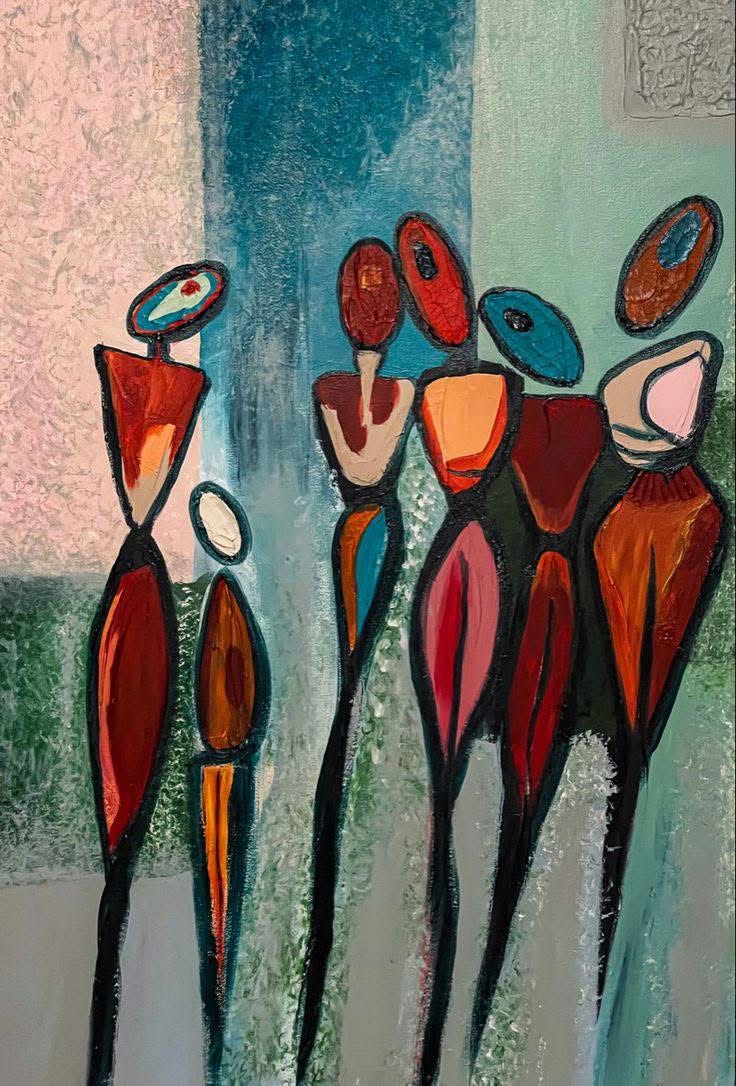
Notes on the Kenyan woman, written on the day the world reduces her to a theme
by Omondi Ochuka
March 8, 2026
Nairobi, Kenya.
Day Doing
Every year, on this particular Sunday in March, the calendar does its ritual reduction. Women become Woman. The turns symbolic. Statistics shared in workshops and WhatsApp groups. Infographics. A graphic designer somewhere has given the struggle a font. Pastel. Rounded edges. A hashtag that rhymes with itself.
I have spent the morning scrolling through this. I want to be clear. I am not cynical about the impulse. The impulse is real and the need is real and anyone who has stood in the Nairobi night and counted the names of women whose deaths barely disturbed the news cycle knows that the impulse to collectivize outrage is our survival strategy.
However, I am a writer. I distrust abstraction the way I distrust painkillers; useful in the short term, addictive and eventually a way of not feeling the actual thing.
So today I want to write about women. Women’s issues. Not the gender gap or the justice deficit or the access to legal protection or the empowerment ecosystem. Those things are real and urgent and someone better positioned than me is writing about them today, and they should. But I want to write about something harder to categorize. I want to write about the women I know. The specific, irreducible, exhausting, incredible and particular.
I am a man in his mid-thirties. I have leukemia. My daughter is in Sweden. My grandmother is in Nyakach. A woman I loved, the mother of my daughter, has been dead for 15 years. I have been thinking all morning about what I owe to this day. What a man who has been held together by women his entire life owes to a day that claims to hold women up.
I think the answer is specificity. Away from tribute or alliance or the concept of correct political consciousness. Simply the honest work of seeing.
Dana
Dana is crocheting a teal sweater with the efficiency that makes you realize how many things she has learned to do without being taught. Nobody taught her. Nobody needed to. The world presented itself and she met it with her hands and judgment and went against being inconvenienced by difficulty.
She is a woman who has buried a husband almost three decades now, raised children in the pits of scarcity that is rural Kenya without ever, and I want to be honest about this, ever using the word sacrifice about herself. The word sacrificeimplies a choice made between two equally desirable options, one of which is abandoned. My grandmother did not experience it that way. She experienced it as Tuesday. As Wednesday. As the ordinary business of being a person who has people she is responsible for.
This is what I mean when I say the Kenyan mother stomachs things that don’t have the right names yet.
I visit. She makes chai. She asks if I’m eating. She already knows the answer. We argue about whether I’m eating in the register of people arguing about things that are not really about eating. She cuts fruit. I sit in her kitchen and the kitchen smells of childhood, which smells like a person who is not afraid of work, which smells like her.
When I was first diagnosed, she did not breakdown grief in front of me. This was a gift. She cried — I know she cried, the way I know things about her that I was not present to see — but she did not perform it for me. She decided, in the economy of her emotional intelligence, that what I needed was not her grief. It was her compassion. She was the same person the day after the diagnosis that she was the day before it. Slightly more attentive. Same person.
I have been thinking about what it takes to make that decision. The discipline of it. The generosity of choosing your grandchild’s terror over your own. She did not tell me she did this. She didn’t need me to know. It was not for me. It was who she is.
No March 8th graphic is going to capture that. And I don’t mean this as criticism of the graphics. I mean it as a genuine epistemological problem:
How do you theme a person?
Awuor
My daughter is fifteen years old and she is studying towards microbiology and oncology medicine. Aiming for Lund University in Sweden. She sends me voice notes that start in English, some Swahili and end in French and the trajectory of this, English to French, formal to intimate is the most accurate map I have of how she works.
She was named before the dying started. Before I knew, knowing things that have become your daily reality, that dying would be a central subject of this chapter of my life. She was named Awuor (the one who comes in the dawn of morning) by people who were thinking about arrival. She arrived. She has, ever since, continued arriving.
She grew up with a father who was ill and a mother who died and a life that was always available against much of the grief that surrounded her childhood. She grew up with the fact that life is not reliable, love is not invulnerable and Nairobi’s traffic is genuinely philosophical in its annoying move. She grew up reading too much and arguing with me about things I’ve said that she disagrees with, and she is almost always right, which is both my failure as a father and my greatest achievement as a human being. I produced a person who will correct me and be correct.
The Kenyan girl is this girl, too. Not just the statistics or the 579 femicides of last year. Those figures should make every person in this country unable to sleep. The FGM in the counties no journalist visits twice. A girl who cannot sit her exams because her family decided the cost of her education was negotiable. All of that is real. All of that is emergency. My Awuor is also real. The girl who made it. The girl who is in Sweden studying things that matter and FaceTiming her sick father from a Nordic Sunday and making him laugh before she makes her point.
I think about the conditions that made Awuor possible. Her mother. Her grandmother. Every teacher whose name I do not know who saw something in her and extended a small encouragement. The system that, for her specifically, worked. The system that, for hundreds of thousands of other girls exactly like her, does not.
This is the thing March 8 is actually about, I think, when it is at its most honest and not what women have achieved or what they deserve but what the conditions are that allow the particular woman, the specific girl, to become fully herself. What needs to be true for Awuor to exist? What needs to change for the Awuor who doesn’t get to Sweden, and has to live through the Kenyan reality, to also exist?
Marching Women
In January 2024, thousands of women marched in Nairobi. The trigger was Scarlet Wahu. Rita Waeni, twenty years old, murdered and mutilated, her name a sound that should not have been in newspapers for such atrocious reasons. In the preceding years, more than five hundred women killed, according to the Africa Data Hub, since 2016. One woman killed per day in Kenya. A statistic so violent in its ordinarity that you have to sit with it for a while before you can feel it properly.
One woman killed per day.
This means that during the time it takes you to sleep and wake and make chai and argue with someone about traffic and arrive at your desk, a woman in Kenya has died because she was a woman. She was not in combat or involved in an accident. Someone decided that being a woman was, in some configuration of their damaged logic, a killable offense.
The women who marched knew this. They knew the number and they knew the persons behind the numbers and they knew that the system supposed to protect them — the legal framework, police, courts — had been looking at this number for years and had found it, apparently, tolerable.
Although, I have marched alongside women in all the #EndFemicide organizing and been involved in drafting petitions and have written extensively as an ally of women, I want to be careful here. I am a man writing about a march that was, explicitly, by and for women. I am aware of this. I am aware that there is a version of this paragraph that centers me. My witness, realization and growth as a man who now understands. I am not interested in writing that way. The women knew long before I knew. The women have always known.
What I want to say, instead, is something about the quality of that protest. It was a protest that critiqued the idea of victimhood while also not denying the fact of victimization. The women who marched were not saying: look at us, we are being killed. They were saying: look at us, we are human. There is a difference in the posture. One asks for pity. The other demands for the dignity and fact of being an actual fucking person.
#StopKillingUs is a demand with the rage of a demand.
This is the Kenyan woman I want to write about. Many women need saving, safety, justice and a system that actually works. My focus moves to the woman who shows up in a protest with a placard and calls things what they are. The woman who dignifies herself in the absence of a world that wants to desecrate and other her.
The Dash
I think about the dash. The typographic mark between the dates on a gravestone. It contains everything. The whole person, compressed into a horizontal line the width of a thumbnail.
March 8 is, in a strange way, a kind of national dash. The day between what has been done to women and what is owed to them. The day between the stat and the name. Between the policy and the person.
There is a report of the Technical Working Group on GBV and Femicide, assembled in January 2025 by the government of Kenya, forty-two members, mandated to assess and recommend. It remains unpublished. It was prepared. It was briefed to the deputy president. It went somewhere into the pipeline of delay that is the administrative home of things that are urgent until they are inconvenient. The shelters for GBV survivors are operating without sufficient resources. Of ninety-five shelters mapped nationally, most run on nothing. The Protection Against Domestic Violence Amendment Bill has been in preparation since last year. It is being prepared. It is being reviewed. It is pending.
A woman was killed somewhere in Kenya between when I started writing this and when I finished it.
What I am asking from this vantage point, a man in his mid-thirties, teaching, ill, grieving, writing and trying to be honest is this:
What is in your dash? What are you doing with the space between acknowledging the problem and actually changing something?
The day is not nothing. The global attention is not nothing. It is not, by itself, sufficient. The day is a mirror-beginning.
March 8, 2026
It is a Sunday. Nairobi is going about its enormous, graceless business. The aftermath of countrywide floods that has left 43 people already dead. Most likely more women. The city is more devastated than any other place. Matatus. Arguments. Someone selling something on a roundabout. Nairobi that has been convinced it is temporary, doing its temporary things.
My grandmother is in the village, doing something with her hands. Crocheting. Awuor will call me this afternoon. She will flext her bad Dholuo. She will disagree with something I’ve said. She will be right. Nikki is not here. She is not here. That is to say, she is everywhere I look, in the negative space of all my looking. The women who march are still here. Counting.
What I want to say, on this March 8th, to any man reading this, without the performance of virtue, allies-badge or self-congratulating language of a conscious and upright man. Look at the specific woman in your life. Not Woman. Not women. Her. The specific dimensions of her life, needs, personality, resilience, ordinariness, realties, dreams and the weight of what she lives through that you have never been asked to comfront. Look at her without making her a lesson, extracting a parable for your own growth or centering your realization.
Just look.
And then ask what you are actually doing today, next week and in the structures of your life. How you show up or don’t. To change the conditions that make being a woman in Kenya require this much strength.
She should not have to be this strong to simply exist. That is the thing. She should not have to be protected if we did the work of being safe. The work of responsive and accountable systems. The work of dignifying the humanity of the person she is.
Omondi Ochuka is a social researcher, educator, health economist and author living with acute myeloid leukemia. He writes at Proof of Life on Substack.